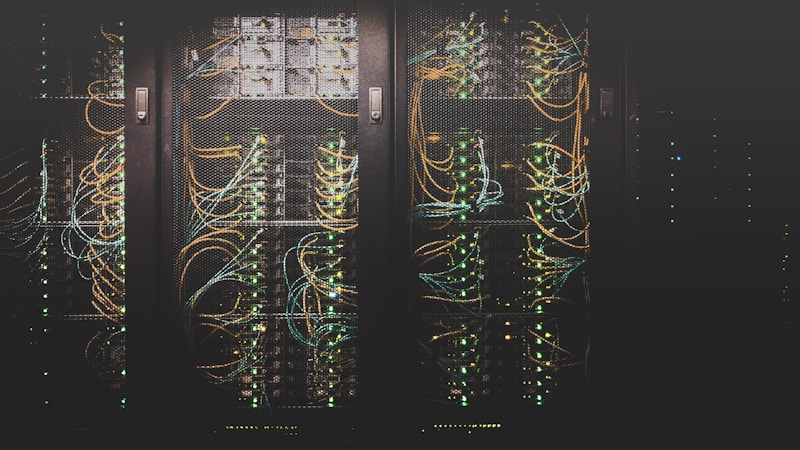
NVIDIA and LG Group announced in early June 2026 that they are building an AI factory to serve as the foundation for the group’s next wave of AI-driven businesses — spanning robotics, autonomous driving, data center technologies and GPU cloud services.
The AI Factory
The collaboration combines NVIDIA’s full-stack, end-to-end AI factory platform with LG Group’s leadership in consumer electronics, robotics, mobility components, smart spaces and data centers. The AI factory will provide accelerated computing infrastructure to train, simulate, validate and deploy AI applications, connecting model development, physical AI data generation, robot simulation and training, edge deployment and factory-scale digital twins into a single workflow.
On the infrastructure side, the effort aligns with NVIDIA DSX. LG Electronics is contributing prefabricated modular design plus cooling solutions including cooling distribution units and cold plates, while LG Uplus plans a large-scale AI data center for the latest NVIDIA GPUs. LG Energy Solution is exploring 800-volt direct-current data center energy solutions aligned with NVIDIA’s BESS self-qualification guidelines.
Robotics and Physical AI
LG Electronics is developing home-based robots such as CLoiD for indoor household tasks. By integrating NVIDIA Isaac Sim and Isaac Lab into its workflows, LG can simulate, train and validate these cobots in physically accurate virtual environments before deployment, and is exploring the Isaac GR00T reasoning model for home robots and modular platforms.
To attack the training-data bottleneck, LG Electronics is building a physical AI data factory that turns compute into data, using NVIDIA Cosmos world foundation models for synthetic data generation. LG Innotek will supply optics-optimized sensing for NVIDIA’s GPU architecture, and LG CNS is integrating NVIDIA robotics technologies into its PhysicalWorks industrial robot platform.
Autonomous Driving
In mobility, LG Electronics is aligning its advanced driver-assistance systems and in-vehicle AI with the NVIDIA DRIVE platform, covering the DRIVE Hyperion reference architecture for its autonomous driving, ADAS and software-defined vehicle roadmap. The company plans to use NVIDIA DRIVE AGX accelerated compute for AI-powered cockpits and edge AI processing, while LG Innotek collaborates on next-generation sensing, connectivity and lighting components.
Sovereign AI With EXAONE
NVIDIA and LG AI Research are also advancing EXAONE, one of Korea’s leading sovereign AI models and an open model family. LG AI Research used NVIDIA Blackwell GPUs, the NeMo framework and Nemotron open datasets to support EXAONE development, plus TensorRT-LLM software for optimized inference engines. The companies plan to broaden EXAONE and agentic AI adoption across LG Group businesses through platforms such as ChatEXAONE.
What This Means
The move positions LG as one of NVIDIA’s deepest industrial partners, spanning consumer robots, manufacturing, energy, mobility and sovereign AI. For NVIDIA, it extends the AI factory playbook into Korea’s manufacturing and electronics heartland — and for LG, it converts decades of production know-how into the workloads that will train the physical AI systems of the next decade.