
Cursor Launches Projects and Self-Hosted Cloud Agents
Cursor ships Projects — persistent project-scoped workspaces for agents, conversations, and context — plus the ability to run cloud agents on machines you manage.

OpenAI Introduces the Agents API for Building Autonomous AI
OpenAI launches the Agents API, giving developers native primitives — models, tools, and state management — to build autonomous agents without stitching together separate systems.

FLUX Upscale: 2K and 4K Video Regeneration From Black Forest Labs
Black Forest Labs ships FLUX Upscale, a new tool and API endpoint that regenerates any video at up to native 4K resolution — extending the FLUX 3 family beyond image generation into video pipelines.

Midjourney Acquires Co-Star Astrology App, Plans Standalone Image Generation App
Midjourney purchased astrology app Co-Star and is building its own standalone image generation application, signaling an expansion beyond text-to-image into consumer apps and broader creative tools.
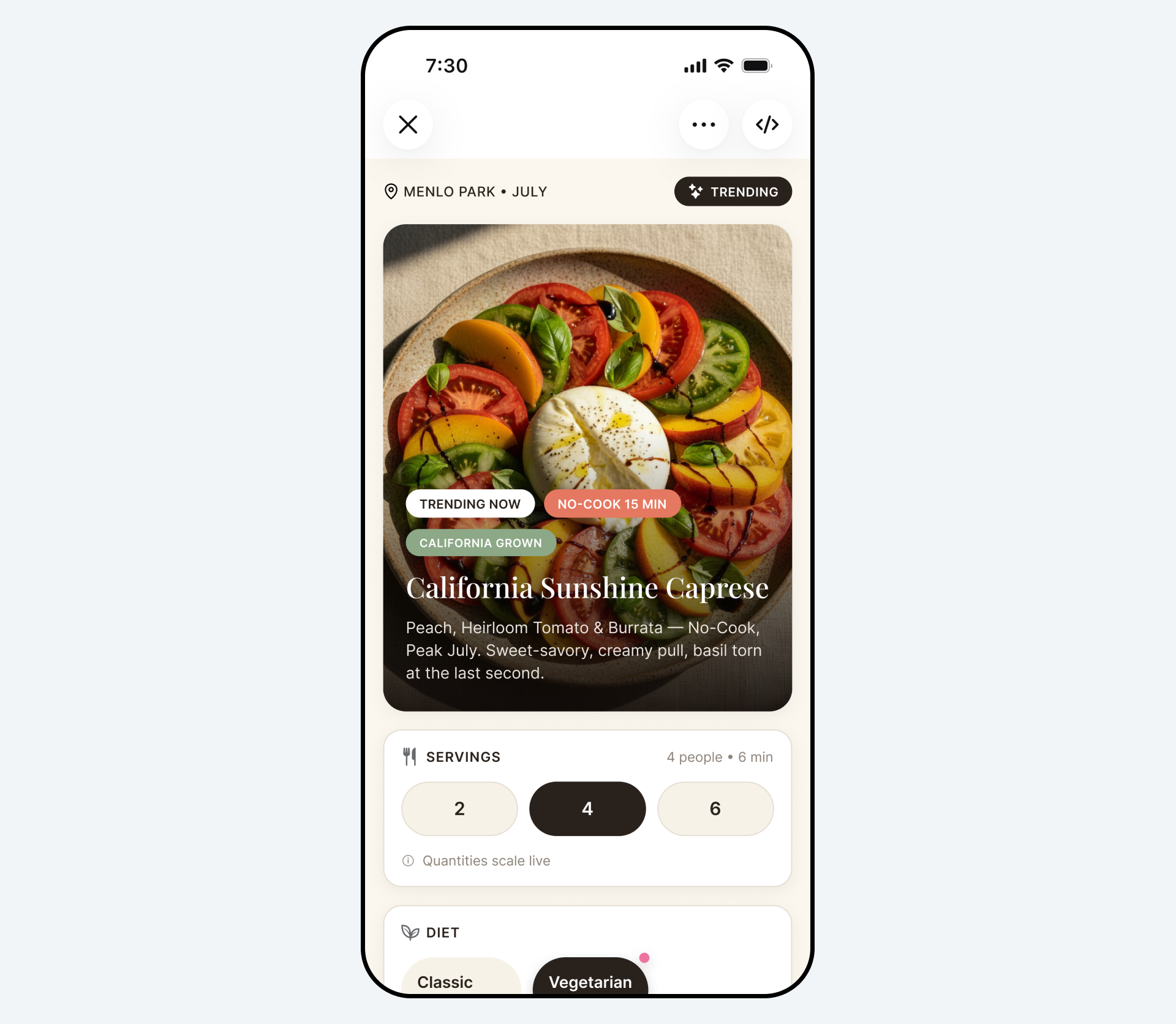
Meta AI Gains Agentic Capabilities: Muse Spark 1.1 Now Controls Gmail, Calendar, and Creates Slide Decks
Meta launched agentic AI features powered by Muse Spark 1.1, allowing Meta AI to autonomously plan trips, manage calendars, build slide decks, and conduct research. The rollout spans the Meta AI app, meta.ai, and WhatsApp in select markets.

Anthropic Introduces Claude for Teachers: Free Premium Access for US K-12 Educators
Claude for Teachers gives verified US K-12 educators a free year of premium Claude, Claude Code, and Cowork, plus standards-aligned lesson planning and privacy protections that never train on teacher chats.
Claude Cowork Expands to Web and Mobile, Targeting Business Professionals Over Coders
Anthropic brings Claude Cowork, its browser and desktop automation agent, to the web and iOS and Android apps after data showed most users are business professionals, not developers.

Muse Image: Meta's Image Generation Built for Your World
Meta quietly launches Muse Image, an image generation model designed around personal context — part of the Muse family alongside the Muse Spark model and the Muse agent.

Runway Introduces Agent 2.0: Autonomous AI Video Creation With Multi-Step Workflows
Runway launches Agent 2.0, an autonomous AI agent that plans, generates, and edits video through multi-step workflows, handling complex creative tasks from concept to final render without human intervention.

Runway Introduces Aleph 2.0 and Edit Studio for Professional AI Video Editing Workflows
Runway launches Aleph 2.0, its latest video generation model, alongside Edit Studio, a new interface for professional AI video editing workflows. Aleph 2.0 also integrates into Figma Weave for design teams.

Grok Imagine Video 1.5 Beats Sora, Veo, and Kling in Blind User Benchmarks at 86% Lower Cost
Grok Imagine Video 1.5 beat Sora 2, Veo 3.1, and Kling in blind user benchmarks at 86% lower cost, with native audio and dialogue in one pass.
ElevenLabs Launches v3 Voice Model With Enhanced Emotional Range and Accent Accuracy
ElevenLabs released its v3 voice model with broader emotional range, sharper accent control and native-level pronunciation across 50-plus languages, with lower latency for multilingual speech.
Deezer's New Tool Can Identify AI Music From Spotify, Apple Music, and Others
Deezer's free AI music detector imports playlists from Spotify, Apple Music, SoundCloud and other services and flags synthetic tracks, letting every listener audit a library for AI music.
Pool's new app turns your screenshots into something useful
Pool is a new iOS app that uses AI to sort screenshots into personal collections, find original links behind saved content, and help you rediscover products, recipes and travel ideas you meant to revisit.
DoorDash's New AI Chatbot Lets You Order With Prompts and Photos
DoorDash launched Ask DoorDash, an AI chatbot that builds food and grocery orders from text prompts and photos, finding restaurants by mood, recipe, dietary needs or reservation.
Save Big and Play Bigger: GeForce NOW Summer Sale Brings Major Membership Savings
NVIDIA kicked off the GeForce NOW summer sale with limited-time savings of $35 off a 12-month Performance membership and $70 off Ultimate, plus Guild Wars 3 announced for the cloud.

Deezer Launches AI Music Detection Tool That Identifies AI-Generated Songs on Spotify and Apple Music
Deezer introduced a free AI music detector that scans playlists from Spotify, Apple Music, SoundCloud and YouTube Music to flag AI-generated tracks, supporting 27 languages.
Profiling in PyTorch (Part 2): From nn.Linear to a Fused MLP
Part 2 of Hugging Face's PyTorch profiling series shows how to read torch.profiler traces from nn.Linear through compiled and hand-tuned MLP kernels, and what fuse decisions actually improve.

Anthropic Launches Fable: A New AI Storytelling and Narrative Generation Platform
Anthropic unveils Fable, a dedicated AI platform for interactive storytelling, long-form narrative generation, and cinematic scriptwriting powered by Claude.

NVIDIA Confidential Computing to Help Expand Apple's Private Cloud Compute
At WWDC 2026, Apple said NVIDIA Blackwell GPUs with Confidential Computing will support confidential inference in Private Cloud Compute as it expands to Google Cloud.
How an Agent Built a 3D Paris Gallery by Chaining Two Hugging Face Spaces
A coding agent built a 3D Paris gallery by chaining two Hugging Face Spaces, Ideogram 4 and TripoSplat, with zero manual image or 3D tooling.

Google Gemini Translation: Real-Time AI Translation Now Supports 200+ Languages with Context-Aware Accuracy
Google's Gemini Omni introduces breakthrough translation capabilities with real-time voice translation, cultural context adaptation, and support for over 200 languages.

Luma Ships Ray3.2 and Scenes: Directing AI Video Frame by Frame
Luma AI launches the Ray3.2 model and API with frame-level creative control, plus Luma Scenes for storyboard-first video workflows — and opens an Open Physical AI Lab to attack generalization in physical AI.
Migrating Your GitHub CI to Hugging Face Jobs
Hugging Face published a guide showing how to route GitHub Actions CI jobs onto its serverless Jobs platform, cutting Trackio CPU CI time by about 30 percent and adding GPU tests.

Runway Aleph: Next-Gen AI Video Generation Platform Sets New Standard for Cinematic Quality
Runway releases Aleph, its most advanced video generation model yet, featuring 4K resolution output, precise motion control, and real-time editing capabilities.

Viggle AI: Character Animation Platform Lets You Control Any Character with Video References
Viggle releases major update to its AI character animation platform, enabling realistic motion transfer, full-body animation, and multi-character scene generation.

Ideogram 3.0: AI Image Generation Platform Adds Photorealistic Typography and Multi-Scene Composition
Ideogram launches version 3.0 with breakthrough text rendering, photorealistic quality, and AI-powered design layout capabilities.

ChatGPT Lockdown Mode: New Privacy Feature Restricts Agent Capabilities for Enterprise Security
OpenAI launched ChatGPT Lockdown Mode, an enterprise control that disables web browsing, agent mode and other networked capabilities to reduce data-exposure risk for IT admins.

Midjourney V7: AI Image Generator Delivers Cinematic Realism With Advanced Style Control
Midjourney releases version 7 with cinematic realism, neural style transfer, real-time collaboration, and a new personalization engine.
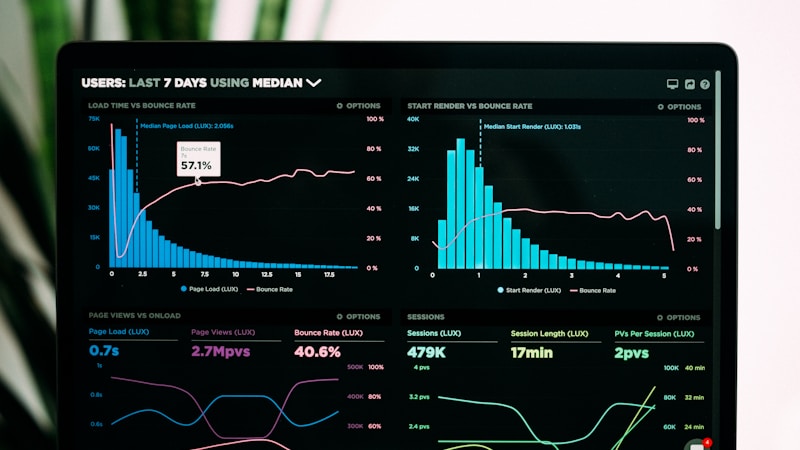
Flow AI: Generative Workflow Automation Platform Redefines Enterprise Productivity
Flow AI launches as a no-code AI workflow builder that connects LLMs, APIs, and enterprise tools into automated multi-step processes.

Pika 3.0: AI Video Platform Introduces Lip-Sync, Multi-Character Dialogue, and Real-Time Generation
Pika releases version 3.0 with synchronized lip movements for AI-generated characters, multi-character dialogue scenes, and real-time video generation.

5 ways Google Search can level up your thrift and vintage shopping
Google shares five AI tools for second-hand shopping: planning days out in AI Mode, identifying finds with Lens, shopping with Circle to Search, Virtual Try-On, and using Lens to resell your closet.
OpenAI Expands Codex Beyond Developers: AI Coding Agent Now for Every Enterprise Role
OpenAI extends Codex to every enterprise role, not just developers — adding Sites, Annotations, and enterprise plugins for product managers, lawyers, data analysts, and operations teams.

Adding MCP Tools to Reachy Mini
Reachy Mini's conversation app can now call tools hosted in public Hugging Face Spaces over MCP, adding web search and weather skills with one command while keeping built-in robot tools local.

ElevenLabs Expands Generative Audio Platform with Voice Isolation, Sound Effects, and Multi-Speaker Podcast Generation
ElevenLabs unveils new voice isolation technology, AI sound effects generation, and a complete multi-speaker podcast creation studio.

How we used Gemini to build Google I/O 2026
Google used its own Gemini stack to build I/O 2026, from the Timmy TPU film and brand identity to live speaker title cards and on-site sticker printing.

Leonardo AI Launches Unified Creative Suite Combining Image, Video, and 3D Generation
Leonardo AI introduces a unified platform that combines image generation, video creation, and 3D asset generation in a single workflow.
Take Our I/O 2026 Quiz, Vibe Coded in Google AI Studio
Google published a quiz on its top I/O 2026 announcements, built end-to-end with Google AI Studio and the Antigravity coding agent by an editor with no coding background.

You can no longer Google the word 'disregard'
Google's AI-first Search experience breaks on the single word 'disregard', returning a huge block of empty space and pushing real results so far down that even Bing beats it.

Google Gemini Now Integrates Adobe, Canva, and CapCut as Full Creative Studio Hub
Google announces deep integrations with Adobe, Canva, and CapCut inside Gemini, turning the AI assistant into a full creative studio hub for content creation workflows.
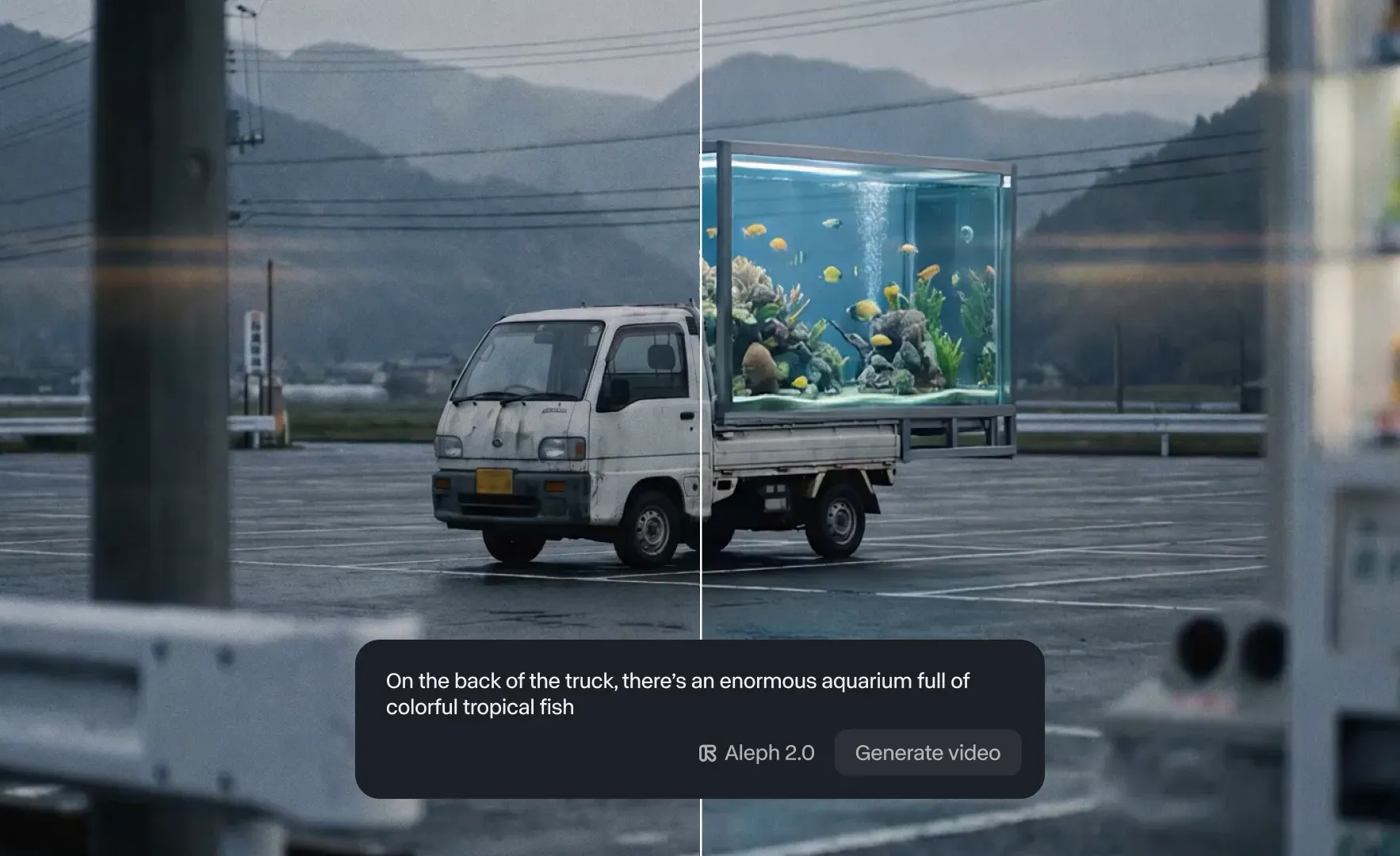
Runway Launches Aleph 2.0 and Edit Studio: Precision AI Video Editing at 1080p With Frame-Perfect Control
Runway released Aleph 2.0, an upgraded video editing model, alongside Edit Studio — a new product that brings image-editing precision to video with support for up to 30 seconds of 1080p footage.
Google Gemini Omni Flash Launches: The 'Nano Banana for Video' Creates and Edits Video From Any Input
Google launched Gemini Omni Flash, the first model in the Omni family, at I/O 2026 — a multimodal video generation and editing system that accepts text, images, audio, and video as input.
Spotify and Universal Music strike deal allowing fan-made AI covers and remixes
Spotify and Universal Music Group will let Premium subscribers create AI-generated song covers and remixes, with participating artists sharing in the revenue via a paid add-on.
Six search engines worth trying now that Google isn’t really Google anymore
With Google Search going AI-first after I/O 2026, six alternatives worth trying: Kagi, DuckDuckGo, Startpage, &udm=14, Brave and Ecosia — with pricing, privacy and AI-control details.
xAI Launches Grok 4.3 API With 83% Price Cut, Grok Build CLI, and Grok Skills for Persistent AI Workflows
xAI released Grok 4.3 to all API developers with an 83% price cut, launched Grok Build as a coding agent CLI, and introduced Grok Skills for reusable, cross-conversation AI workflows.
Spotify adds AI-powered Q&A and briefing generation features to podcasts
Spotify is rolling out AI Q&A for Premium mobile users in the US, Sweden, and Ireland, plus daily or weekly auto-generated briefing podcasts from prompts, links, PDFs, and custom voices.
Spotify launches an ElevenLabs-powered audiobook creation tool
Spotify is launching an ElevenLabs-powered AI audiobook tool in Spotify for Authors this June, with no exclusive contract, so authors can publish their generated audiobooks anywhere.
Spotify takes on Google's NotebookLM with its new app
Spotify's new Studio by Spotify Labs desktop app, in research preview across 20-plus markets, uses an AI agent to connect email and calendar and generate personal daily-briefing podcasts.
The Path, founded by Tony Robbins and Calm alums, hopes to offer safer AI therapy
The Path raised a $14.3 million seed round and claims its AI therapy model scores 95 on the Vera-MH safety benchmark — versus a top score of 65 for consumer chatbots.

Kling AI 3.0 Delivers World's First Native 4K AI Video Generation, Challenging Runway and Google
Kuaishou's Kling AI released version 3.0 with native 4K video generation, multi-shot storyboarding, and native audio — positioning it as the most feature-complete AI video platform for professional creators.
OpenAI Launches Daybreak Cybersecurity Platform With GPT-5.5-Cyber to Automate Vulnerability Detection and Patching
OpenAI unveiled Daybreak, a full-stack cybersecurity platform powered by GPT-5.5-Cyber, that automatically finds, tests, and patches vulnerabilities — directly competing with Anthropic's Claude Mythos.

How AI Mode is changing the way people search in the U.S.
One year after launch, Google AI Mode passed a billion monthly users as US searchers shift from keywords to natural language, voice, and images.
New Ways to Create and Get Things Done in Google Workspace
At Google I/O 2026, Google announced conversational voice in Gmail, Docs and Keep, a new image tool called Google Pics, AI Inbox upgrades and the Gemini Spark agent.
OpenAI Brings Codex to ChatGPT Mobile: Remote AI Control from Anywhere
OpenAI launches Codex remote access in ChatGPT for iPhone, iPad, and Android, letting users supervise AI agents from their phone while work happens on their computer.

Sea You in the Cloud: ‘Subnautica 2’ Early Access Dives Onto GeForce NOW
Subnautica 2 joined GeForce NOW day-and-date with its Early Access launch, leading 11 new games, alongside a HITMAN World of Assassination reward event and Forza Horizon 6 early access.
NVIDIA and SAP Bring Trust to Specialized Agents
At SAP Sapphire, NVIDIA and SAP expanded their collaboration to run specialized agents with security and governance controls, embedding NVIDIA OpenShell in SAP Business AI Platform.

OpenAI Launches GPT-Realtime-2 Voice Models With GPT-5-Class Reasoning
OpenAI introduces three new audio models in the API: GPT-Realtime-2 for conversational reasoning, GPT-Realtime-Translate for live translation, and GPT-Realtime-Whisper for streaming transcription.
Google Unveils Gemini Enterprise Agent Platform at Cloud Next
Google consolidates Vertex AI and Agentspace into new Gemini Enterprise Agent Platform for building autonomous AI agents.

DeepL Launches Real-Time Voice Translation Platform
DeepL unveils DeepL Voice for instant speech-to-speech translation, challenging Google and Microsoft in language technology.

OpenAI Unveils ChatGPT Images 2.0 with Web Crawling
New image generator can crawl the internet and verify its own output for improved accuracy.

Google Turns Chrome Into Your AI Coworker
Google announces Gemini-powered 'auto browse' for Chrome enterprise, along with new TPU chips and AI security tools.

Google Cloud and Salesforce Partner on Enterprise AI Agents
New integrations enable AI agents to work across both platforms, solving data fragmentation challenges.

OpenAI Launches Workspace Agents for ChatGPT Teams
Teams can now create custom AI agents that handle complex workflows in ChatGPT, competing with Google's new enterprise AI push.

Oracle Expands AI Database Capabilities on Google Cloud
Oracle brings AI-powered database agents to Google Cloud, enabling natural language queries across enterprise data.
OpenAI Enlists Cognizant and CGI for Codex Enterprise Push
OpenAI launches partner program to scale Codex through global systems integrators.

YouTube Expands AI Deepfake Detection to Entertainment Industry
YouTube launches AI likeness detection for celebrities, expanding protection against AI-generated content.

MiniMax Speech 2.8: AI Voices That Hesitate and Breathe
MiniMax ships Speech 2.8 with native sound tags for natural fillers, 10-second high-fidelity voice cloning, and studio-grade noise-free output.

Claude Code Costs Up to $200 a Month. Goose Does the Same Thing for Free
Block's open-source AI agent Goose matches much of Claude Code's functionality for free, running local models via Ollama as developers revolt against Anthropic's rate limits.
Salesforce rolls out new Slackbot AI agent as it battles Microsoft and Google in workplace AI
Salesforce launched a rebuilt Slackbot AI agent for Business+ and Enterprise+ plans, powered by Claude, that searches enterprise data, drafts documents, and acts on behalf of employees.
Anthropic Launches Cowork, a Claude Desktop Agent That Works in Your Files — No Coding Required
Anthropic released Cowork on January 12, 2026, a Claude Desktop agent that reads, edits, and creates files inside a chosen folder — no coding required. Built in roughly ten days using Claude Code, it targets non-technical users on the Max plan.