
Gemini Gains Agentic Video Understanding
Google introduces agentic video understanding in Gemini, letting models navigate, reason about, and answer questions on long videos — from content review to sports analysis.

OpenAI Introduces the Agents API for Building Autonomous AI
OpenAI launches the Agents API, giving developers native primitives — models, tools, and state management — to build autonomous agents without stitching together separate systems.

Meta Launches Muse: The World's First Personal AI Agent Built for Everyone
Meta introduces Muse, a secure, private personal AI agent that proactively does the work — sending emails, booking travel, negotiating bills — running on a dedicated Muse Secure VM with a Sentinel safety agent, powered by the new Muse Spark model.

Cohere Labs Maps the Agentic Task Ecosystem — Only 2.6% of 696,000 AI Tools Fully Automate Work Tasks
Cohere Labs aggregates 696,000 AI tools across 123,000 MCP servers into the largest open dataset of agentic AI, revealing where agents are actually being built — and where they aren't.

Grok 4.6: Built for Long-Running Agents and Visual Work
xAI's Grok 4.6 launches with a focus on long-running agents and more ambitious interactive and visual work, introduced first through Cursor's platform.

MCP Goes Stateless: Anthropic's Bold Bet on Simplifying AI Tool Use
Anthropic released a major update to the Model Context Protocol, moving to a stateless architecture. The change aims to simplify AI agent development but requires significant rewrites of existing integrations.
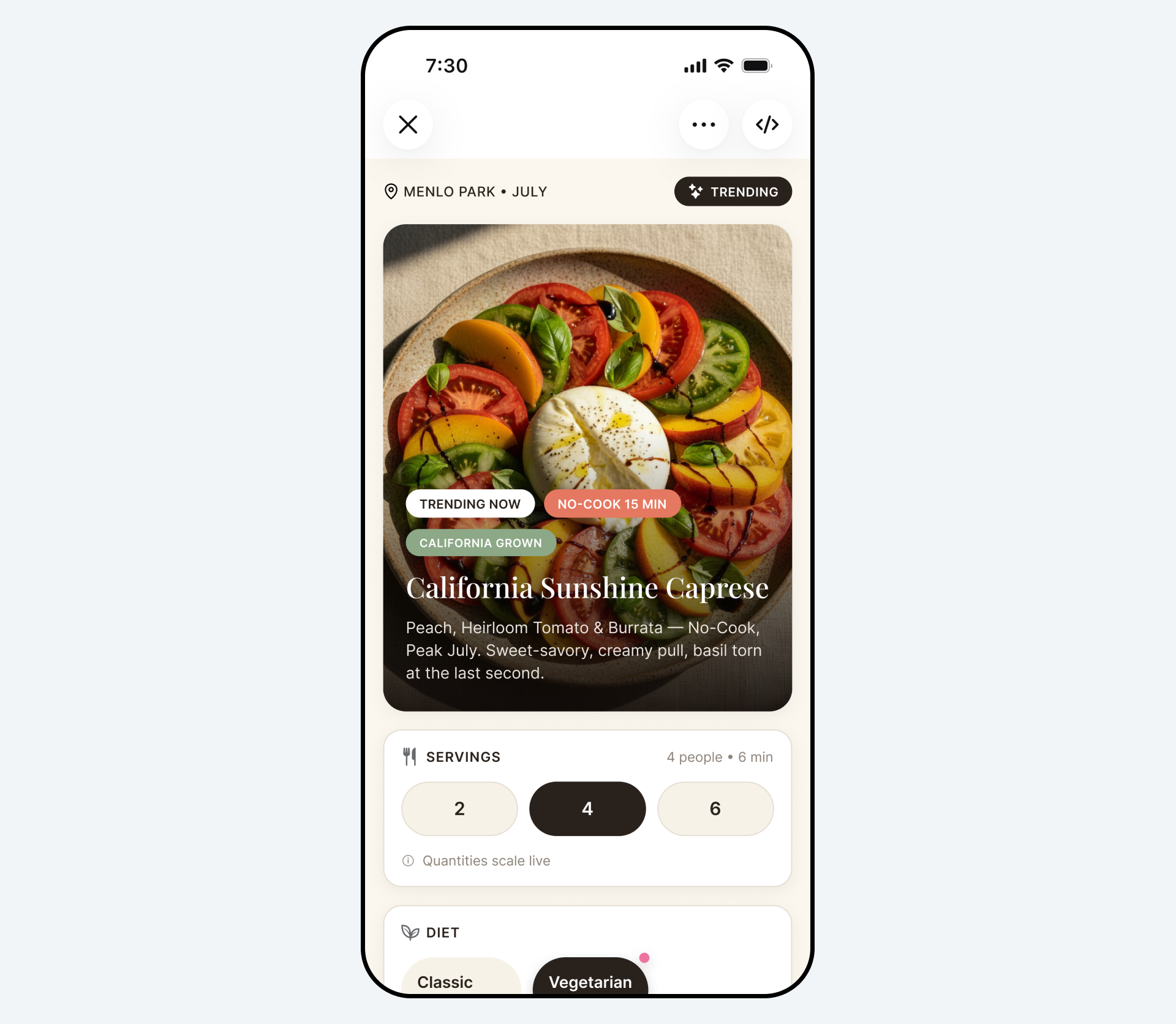
Meta AI Gains Agentic Capabilities: Muse Spark 1.1 Now Controls Gmail, Calendar, and Creates Slide Decks
Meta launched agentic AI features powered by Muse Spark 1.1, allowing Meta AI to autonomously plan trips, manage calendars, build slide decks, and conduct research. The rollout spans the Meta AI app, meta.ai, and WhatsApp in select markets.
Claude Cowork Expands to Web and Mobile, Targeting Business Professionals Over Coders
Anthropic brings Claude Cowork, its browser and desktop automation agent, to the web and iOS and Android apps after data showed most users are business professionals, not developers.
NVIDIA Releases Nemotron Open Synthetic-Data Initiative With 10 Trillion Plus Pre-Training Tokens
NVIDIA's Nemotron open-data initiative releases over 10 trillion pre-training tokens and millions of post-training samples for building AI agents, plus region-specific personas and a Prompt Atlas.

Anthropic Launches Claude Science: An AI Workbench for Researchers With NVIDIA BioNeMo Integration
Anthropic launched Claude Science, an AI workbench for scientists with 60-plus curated skills, auditable artifacts, and on-demand compute, now in beta for Pro, Max, Team, and Enterprise plans.

Anthropic Launches Claude Sonnet 5: First Sonnet-Class Model to Outscore Opus 4.8
Anthropic released Claude Sonnet 5 on June 30, 2026, making it the default model for Free and Pro plans. Priced at $2 per million input tokens, it is the first Sonnet-class model to outscore the Opus 4.8 flagship.

How Agents Are Transforming Work: Anthropic Reports Claude Code Usage Surges in Enterprise
Anthropic's report shows Claude Code and Cowork usage surging in enterprise as AI agents handle multi-step workflows that previously required constant human oversight.
DoorDash's New AI Chatbot Lets You Order With Prompts and Photos
DoorDash launched Ask DoorDash, an AI chatbot that builds food and grocery orders from text prompts and photos, finding restaurants by mood, recipe, dietary needs or reservation.
Opendoor's India Exit Fuels a Bigger Conversation About AI and Outsourcing
Opendoor is closing its India operations, reigniting the debate over whether AI is reshaping the economics of offshore work as India becomes the world's largest GCC market.
How an Agent Built a 3D Paris Gallery by Chaining Two Hugging Face Spaces
A coding agent built a 3D Paris gallery by chaining two Hugging Face Spaces, Ideogram 4 and TripoSplat, with zero manual image or 3D tooling.

ChatGPT Lockdown Mode: New Privacy Feature Restricts Agent Capabilities for Enterprise Security
OpenAI launched ChatGPT Lockdown Mode, an enterprise control that disables web browsing, agent mode and other networked capabilities to reduce data-exposure risk for IT admins.
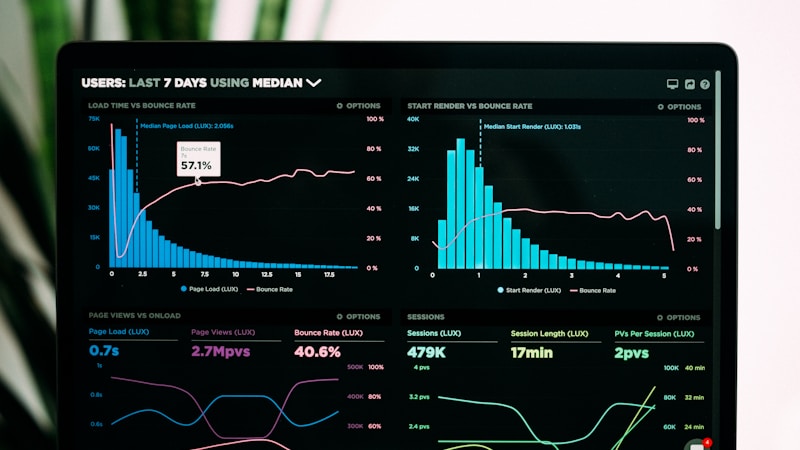
Flow AI: Generative Workflow Automation Platform Redefines Enterprise Productivity
Flow AI launches as a no-code AI workflow builder that connects LLMs, APIs, and enterprise tools into automated multi-step processes.
Designing the hf CLI as an Agent-Optimized Way to Work With the Hub
Hugging Face rebuilt the hf CLI so the same commands serve humans and coding agents, cutting token use up to 6x on multi-step Hub tasks and trimming agent tool calls by roughly 30 percent.
OpenAI Expands Codex Beyond Developers: AI Coding Agent Now for Every Enterprise Role
OpenAI extends Codex to every enterprise role, not just developers — adding Sites, Annotations, and enterprise plugins for product managers, lawyers, data analysts, and operations teams.
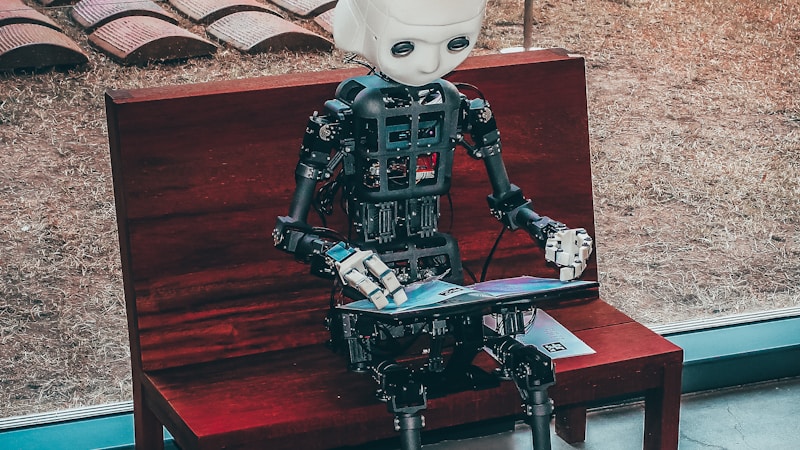
Adding MCP Tools to Reachy Mini
Reachy Mini's conversation app can now call tools hosted in public Hugging Face Spaces over MCP, adding web search and weather skills with one command while keeping built-in robot tools local.

9 demos of Gemini Omni and Gemini 3.5 in action
Nine videos from Google I/O 2026 show Gemini Omni editing video through conversation and Gemini 3.5 Flash powering agentic coding, generative UI, information agents, and Gemini Spark.

OpenAI Launches DeployCo: A $4 Billion Enterprise Consulting Subsidiary
OpenAI creates DeployCo, a $4 billion consulting subsidiary to help enterprises deploy AI agents, directly competing with the Big Four and Anthropic's professional services push.

Catch Up on the Dialogues Stage at Google I/O 2026
Google's I/O 2026 Dialogues stage brought Sundar Pichai, Demis Hassabis and Google leaders together to debate AI agents, quantum computing, robotics and creativity.

Spotify takes on Google's NotebookLM with its new app
Spotify's new Studio by Spotify Labs desktop app, in research preview across 20-plus markets, uses an AI agent to connect email and calendar and generate personal daily-briefing podcasts.
Google Is Pitching an AI Agent Ecosystem to Consumers Who May Not Buy It
At I/O 2026 Google unveiled a confusing constellation of consumer AI agents — Spark, information agents, Daily Brief, Android Halo — most locked behind paywalls.
100 things we announced at I/O 2026
Google I/O 2026 packed in more than 100 announcements — Gemini 3.5 Flash, Gemini Omni, Antigravity 2.0, Universal Cart, Gemini Spark, and a reimagined AI Search box — headlined by agents that run 24/7.
Google I/O 2026: Gemini 3.5 Flash, Gemini Spark 24/7 Agent, and Omni Video Model Reshape AI Landscape
Google launched Gemini 3.5 Flash with frontier agentic performance, introduced Gemini Spark as a persistent personal AI assistant, and unveiled Omni Flash for video generation at I/O 2026.
Gemini 3.5: Frontier Intelligence with Action
At Google I/O 2026, Google launches Gemini 3.5 Flash, an agentic coding model that beats Gemini 3.1 Pro on key benchmarks and runs 4X faster than frontier rivals.
New Ways to Create and Get Things Done in Google Workspace
At Google I/O 2026, Google announced conversational voice in Gmail, Docs and Keep, a new image tool called Google Pics, AI Inbox upgrades and the Gemini Spark agent.
The Open Agent Leaderboard
An open benchmark from IBM Research that compares full AI agent systems — not just models — across six tasks, reporting both quality and cost per task.
OpenAI Brings Codex to ChatGPT Mobile: Remote AI Control from Anywhere
OpenAI launches Codex remote access in ChatGPT for iPhone, iPad, and Android, letting users supervise AI agents from their phone while work happens on their computer.

Hermes Unlocks Self-Improving AI Agents, Powered by NVIDIA RTX PCs and DGX Spark
Hermes Agent from Nous Research crossed 140,000 GitHub stars in under three months, bringing self-improving AI agents to NVIDIA RTX PCs, workstations, and DGX Spark.
Microsoft MDASH: Multi-Model AI Security System Finds 16 Zero-Day Vulnerabilities
Microsoft's new agentic security system MDASH orchestrates over 100 specialized AI agents to discover vulnerabilities, topping industry benchmarks.

Google Puts Gemini at the Center of Android With AI Agent Capabilities
Android gets Gemini Intelligence-powered features including cross-app automation, vibe-coded widgets, AI in Chrome, and a redesigned Android Auto with Gemini.
NVIDIA and SAP Bring Trust to Specialized Agents
At SAP Sapphire, NVIDIA and SAP expanded their collaboration to run specialized agents with security and governance controls, embedding NVIDIA OpenShell in SAP Business AI Platform.
Anthropic's AI Agent Closes First Real-Money Deal
Anthropic's AI agents completed autonomous transactions in a controlled marketplace experiment, marking a milestone in agentic AI.
Google Cloud and Salesforce Partner on Enterprise AI Agents
New integrations enable AI agents to work across both platforms, solving data fragmentation challenges.
Salesforce rolls out new Slackbot AI agent as it battles Microsoft and Google in workplace AI
Salesforce launched a rebuilt Slackbot AI agent for Business+ and Enterprise+ plans, powered by Claude, that searches enterprise data, drafts documents, and acts on behalf of employees.
Anthropic Launches Cowork, a Claude Desktop Agent That Works in Your Files — No Coding Required
Anthropic released Cowork on January 12, 2026, a Claude Desktop agent that reads, edits, and creates files inside a chosen folder — no coding required. Built in roughly ten days using Claude Code, it targets non-technical users on the Max plan.